Showing posts with label scripture. Show all posts

Tuesday, September 3, 2013

Software: The Death of Memory?


http://wondergressive.com/wp-content/uploads/2013/06/Neocortex-and-Memory.jpg Last week my Catholic historical theology professor quipped, “Ten years ago I could tell who was Protestant and who was Catholic sitting in my classes because the Protestants knew their Bible. Now I can tell by who has the best Bible Software.”

I use and benefit from my Bible Software daily, but that’s no excuse for neglecting regular and repeated reading and memorization of Scripture. The sad truth is that Bible Software has made students dependent on their machines rather than their memory for knowing and accessing the scriptures with speed and accuracy. This reminds me of Plato’s famous criticism of books as a means of destroying memory.

One of my seminary professors was fond of citing Luther’s encouragement to his students, “Read scripture regularly and repeatedly until you become a fit concordance.” I could not find the source of the quote, but his point stands. I am no Luddite and I have no illusions that Bible software is going away. What, if anything, can be done to encourage students to know the scriptures by heart rather than simply relying on computers to access them quickly? Or is this not really that important? Am I just old-fashioned? What is lost when memory gives way to software?

Thursday, May 12, 2011

Why the Genesis Apocryphon Matters

Over the last week or two, I’ve devoted quite a bit of time to translating portions of one of the earliest discovered texts of the Dead Sea Scrolls (DSS) known as the “Genesis Apocryphon” (4QapGen). When people ask me what I’m doing and I tell them they usually think, and occasionally even ask, “Who cares about the Genesis Apocryphon?” In a sense, this question speaks to the value of the DSS as a whole.

First, the scrolls are interesting because they provide insight into an ancient culture. In this way the Genesis Apocryphon matters similarly to the way Tacitus’ writings matter. Historically speaking, then, the scrolls are one of the most important archeological finds of the 20th century. Second, more than just providing information about history, the DSS illuminate the thought-world of Jews living near the time of Jesus and the earliest Christians. Debates about when exactly 4QapGen was written are unsettled, but the range is between the latter half of the first century BCE to the first half of the first century CE. Carefully reading this text and other DSS gives us information about what Jews around the time of Jesus thought, wrote, and believed. Third, the specific text of the Genesis Apocryphon, among other DSS, shows how some Jews read their scriptures. My main interest is here. What can the Genesis Apocryphon tell us about how Jews before or around the time of Jesus read scripture? Ultimately, this may show us how Jesus and Paul used scripture in similar or different ways than their contemporaries.

The Genesis Apocryphon uses scripture in a fascinating way. In this sense 4QapGen is an odd piece of literature. It is difficult to classify literarily because it follows the narratives of Genesis in terms of chronology and outline, but differs in details with numerous expansions and omissions from the text of Genesis itself. 4QapGen is too loose with the text of Genesis to be classified as a Targum (an Aramaic interpretation) and does not follow characteristic interpretive guidelines of exegesis focusing on a specific text to be described as “Midrash.” So years ago, the notable Jewish scholar Geza Vermes suggested the phrase “Rewritten Bible” as a form of Jewish interpretation that includes the Palestinian Targum, Josephus’ Antiquities, Pseudo-Philo’s Biblical Antiquities, Jubilees, and the Genesis Apocryphon.[1]

The phrase “Rewritten Bible” is helpful but also a bit anachronistic. The phrase is historically problematic because when the Genesis Apocryphon was written, and when Jesus walked, the Bible did not yet exist. This is not to say that the texts of the Pentateuch, prophets and writings did not exist, but that the concept of “Bible” was not yet a reality. So, we have to be careful about assuming too much how various Jewish works treat the texts which were later canonized and imbued with an elevated authority. That said, the phrase should probably not be abandoned.

The fact that a certain body of texts provided the literary concerns of people hundreds of years after those texts were written means something. The fact that those same texts were later officially canonized does not mean that the idea of sacred writing was not at work much earlier. There is not space to fully address these issues here, but the way in which Jewish literature focuses on Torah to provide a core identity and provide insight into divine activity in new historical situations means that they read this literature as something like what would later be called “Bible.”

More to come on this specific text, but first I want to open up some discussion on the DSS. 

  • Do you think the DSS matter? Why? How can they be helpful?
  • What insights have you gleaned from the scrolls?
  • If you have had little or no interaction with the DSS, what questions do you have?


[1] Geza Vermes, Scripture and Tradition in Judaism, Studia Post-Biblica 4 (2nd edt. Leiden: Brill, 1972) 67-126. Google preview here. I am following Daniel Machilea, “The Genesis Apocryphon (1Q20): A Reevaluation of its Text, Interpretive Character , and Relationship to the Book of Jubilees,” (PhD. Dissertation University of Notre Dame 2007) 7-8 available for free viewing here.

Thursday, January 27, 2011

Canon (not the thing you shoot)


I am frequently asked, "How did these books end up in the Bible?" The implication of this question is that there were some books that might well have been included but were not. For many Christians this idea can be unnerving. How can it be that God's inspired word was pieced together? How do we know if they got it right? Who is the "they" that decided what books made the cut?

The recent media frenzy over the so-called "secret gospels" has only made the questions more confusing. In addition, Dan Brown's wildly popular The Da Vinci Code plays on this confusion in portraying the final cut as the decision of a pagan Roman emperor centuries after the apostles died. These are just two prominent examples of the kind of sensationalism that often passes for historical inquiry about the Bible at the popular level.
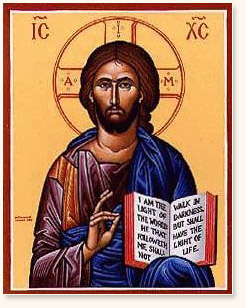
Being from a protestant tradition in an area with quite a few Roman Catholics, I am often asked why my Bible is slimmer than the one Joe Ratzinger uses. Usually people only ask me to confirm that "Bible-believing" Christians do not have to pay attention to Joe's extra books. Still, there is doubt. Are we missing something? Are they adding something?

These questions and concerns revolve around a concept called "canon." The word "canon" comes from the Greek word kanōn (pronounced: CAN - O [as in open] N), which refers to a "measuring stick" like a ruler. It means a "rule," "standard" or "limit" and appears only rarely in the NT (Gal 6.16; cf. 2 Cor 10.13, 15, 16). Today, when people talk about the books in the Bible, they are talking about the "canon" – which books are read as Bible and which ones are not.

When it comes to the canon of scripture, what questions do you find yourself asking most often? Or what questions do you find yourself asked most often?

Friday, October 22, 2010

“Scripture” in 2 Clement


I am perpetually fascinated by the concept of scripture‒ both how it developed and how people use it. Second Clement is an interesting case study in the development and use of Scripture in the early church. The book is widely recognized as an early Christian homily (a fancy word for sermon) written as an exposition of "scripture" for delivery in a worship gathering. If it is in fact an early Christian homily, then it represents the earliest example of such outside of the NT itself (cf. Acts 3.12-26; 20.18-35 and possibly the book of Hebrews). Though Clement's name is attached to the book it was almost certainly not written by him (Eusebius, Eccl. Hist. 3.37) and was only prominent among monophysite Christians. Little else is known about the identity of the author or his location. Why, then, is it interesting in relation to scripture?

First, since 2 Clement was most likely a sermon it represents an early picture of what worship services were like in the first hundred years of the church. OT scripture was read and an exhortation based on the text was made by the elders to a congregation. In this sense, then, it gives us insight, albeit limited insight, into the way scripture was used in early church worship. Second, the book displays an interesting a hermeneutic similar to the pesher method of the Essenes. Second Clement uses scripture to speak to his congregation. Indeed, the author writes, "the scripture says," cites Genesis 1.27, and addresses the text to his church (14.2). Scripture speaks to the present situation. There is no intentional use or demonstrable awareness of the context of the cited passages. Third, the words of Jesus are included as "scripture" and thus we to see how gospel traditions were used in worship. Fourth, the focus of the homily is ethical exhortation. This short work of only twenty chapters is a fascinating insight into the use of scripture in the worship of the early church.

The book begins, "Brothers, we ought to think about Jesus Christ as about God as about the judge of the living and the dead" (1.1). Then, the preacher goes on to exhort the congregation to respond to his gracious salvation with obedience (3.4), loving one another (4.3) and general devotion to God (19.1‒14). The author refers to the words of Jesus in calling "sinners" (Mt 9.13 || Mk 2.17 || Lk 5.32) and interprets it as scripture in the same way he does Isaiah (2 Clem 2.4‒5). The salvation that Jesus offers to sinners comes by acknowledging him through obedience (3.2‒5). Here, again, 2 Clement mingles the OT scriptures with Jesus' words as "scripture." He cites Jesus' words from Mt 10.32 || Lk 12.8 adapted as direct speech to the congregation without any reference to the context of the Jesus' commission of the disciples (Mt 10.32) or teaching before a large crowd (Lk 12.8). The writer of 2 Clement even defines what it means to "confess" –meaning wholehearted obedience– by citing Isaiah 29.13. Jesus cited Isaiah's words in response to the Pharisees (Mt 15.8; Mk 7.6) but 2 Clement curiously describes Jesus saying these words "in Isaiah" (3.5). Second Clement makes Isaiah's words Jesus' (cf. also 2 Clem 13.2 citing Isa 52.5). Jesus is portrayed as the one speaking "scripture" both as seen in the gospel traditions and prior to his incarnation in the words of the OT.

The use of gospel traditions in 2 Clement is also interesting. He quotes freely from all three synoptic traditions but never from John. Furthermore, the quotations are never given a context but simply serve to support his ethical exhortations. Once, in response to a question of eschatology, 2 Clement cites a tradition from the Gospel of Thomas 22, "When the two are one, and the outside like the inside, and the male with the female is neither male nor female " (2 Clem 12.2). Clement interprets the esoteric text as a command for authenticity (12.3‒4) and equality among sexes (12.5) which will eventually prompt the end of the age. This citation shows that whoever composed 2 Clement used multiple Jesus traditions.

Not only does the author of 2 Clement cite non-canonical traditions he also cites Jesus saying things not found in any extant tradition. For example, after exhorting believers to "confess" Jesus through good deeds the preacher says, "For this reason, when you do these things, the Lord has said, 'Even if you were nestled close to my breast but did not do what I commanded, I would cast you away and say to you, 'Leave me! I do not know where you are from, you who do what is lawless.'" (2 Clem 4.5). The "quotation" is intended to interpret Jesus' words in Matthew 7.21 (cited in 2 Clem 4.2), but the source is unknown. Similarly, Jesus has a discussion with Peter that is not found in the gospel traditions (2 Clem 5.2‒4) but is similar to (Mt 10.16 || Lk 10.3 and Mt 10.28 || Lk 12.4‒5). There is yet another example of the same phenomenon of an unknown "quotation" (2 Clem 14.3). Though it is somewhat rare, and the "quotations" are in line with the Jesus tradition found in the gospels, the preacher felt quite comfortable citing Jesus' words without devotion to a particular text or tradition. This begs the question of whether 2 Clement is being creative with Jesus' words or if he is simply citing a tradition unknown to us.

In perhaps the most interesting passage in Second Clement in regard to scripture, he refers to "the Bible" or "the books" [τὰ βιβλία]. In his description of the church the preacher refers to "the Bible and the apostles" to indicate that the church "has existed from the beginning [ἂνωθεν]" (14.2). Just as Jesus was preexistent as spirit (cf. 2 Clem 9.5) and "became manifest here in the final days so that he might save us" (14.2), so too the church "became manifest" (14.3). Second Clement uses the "Bible" as an argument for the authority of the church going back to the OT scriptures. The author has taken the ancient OT tradition and made it "his own" without much knowledge of it apart from how it was used in early Christian texts.

How is the use of Scripture similar and different than modern uses of scripture? Obviously, this question requires a context ‒ whose use and which scriptures‒ but you get the idea.

Does this early use of scripture surprise you in any way? Why?

Friday, October 1, 2010

Repent and Obey (1 Clement 7-12)


Having observed the problem of division and its devastating effects in the history of God's people Clement gives a call to repentance and obedience. He uses the OT not just to make his point, but to speak directly into the Corinthian situation. For Clement, the OT scriptures were God's voice to the church.

In chapters 7 and 8 Clement focuses on repentance. Clement includes the Roman church in the call to repent for "we are in the same arena and the same contest is set before us" (7.1). Then Clement looks at past examples of repentance. First, he points to Noah who "preached repentance" (7.6). Clement's second example consists of recounting Jonah's message of destruction on Nineveh which was stayed by the repentance of the Ninevites (7.7). These examples show both the one calling for repentance and the repentant.

Not only have the saints of the past preached repentance but God himself commands it (8.1‒5). Here Clement argues that "the master of all things himself spoke about repentance" and then cites something similar to Ezekiel 33.11. Clement's text reads, "For as I live, says the Lord, I do no want the sinner to die but to repent." The citation does not cohere exactly with the LXX. The characteristic "Thus says the Lord" (τάδε λέγει κύριος) is substituted for "says the Lord" (λέγει κύριος) and the LXX's "ungodly" is changed to "sinners." Also the word for "repent" is more specific in Clement than the LXX's "turn back." Immediately after using the Ezekiel text Clement writes, "and to this he added a good pronouncement," which would suggest Clement is continuing a citation. The "pronouncement," however does not quite fit any specific verses from Ezekiel 33 but rather forms a composite of the main concepts and vocabulary. Clement's use of the OT, then, is not slavishly devoted to the wording of the text of the LXX. After the Ezekiel composite pronouncement Clement describes God as "speaking" Isaiah 1.16-20. The introductions to God's calls to repent in the past show that Clement is using these passages as God's authoritative voice to "speak" directly to the Corinthian division.

How similar are these texts to the Corinthian discord? Ezekiel 33 occurs describes the prophet as Israel's "watchman" (Ezek 33.2, 7) charged with warning the people of God's impending judgment (Ezek 33.5). If Ezekiel does not sound the trumpet of warning then Israel's blood is on his hands (Ezek 33.6, 8). The rest of the oracle calls for repentance especially as it relates to justice (Ezek 33.10‒20). The Isaiah passage is a prophetic denouncement of Israel's hypocrisy. Though filled with injustice, Jerusalem continues to burn offerings and observe feasts (Isa 1.12-14) so God refuses to hear the prayers of his people (Isa 1.15). Isaiah then issues a call to repentance wherein God provides atonement (Isa 1.16‒20). Clearly, Clement is allowing his rebuke of the Corinthians to be "God's rebuke." He is also suggesting that if Corinth refuses to repent then the church will be judged. Consider the examples he offers, Noah's preaching leads to very little repentance and much judgment, Jonah's preaching of destruction leads to repentance but Ezekiel's announcement of coming judgment results in the fall of Jerusalem (Ezek 33.21‒33) and Isaiah's prophecy is one of condemnation.

Since God has called the Corinthians to repent, through Clement's message, it is time to obey. Clement points to the obedient examples of Enoch (9.3) and Noah (9.4) as well as Abraham. The use of Abraham is interesting because father Ab is the picture of obedience par excellence in Second Temple Judaism (esp. Sir 44.19-21; 1 Macc 1.51-2; James 2.18-26) but is portrayed by Paul as the example of faith (Rom 4.1-25; Gal 3.7-9). Clement recounts the highlights of the Abraham narrative especially in regard to obedience (10.1‒7; explicitly citing Isa 41.8; Gen 12.1-3; 13.14-16; 15.5-6; 18.21; 22.1ff.). Clement's interpretation  matches Second Temple Judaism more closely than Paul's arguments to the church in Rome.

After spending a significant amount of time on Abraham, reminiscent of Jewish retellings of the story, Clement continues his examples of obedience. Lot too becomes an example and his wife is contrasted as a negative example (11.1‒2; cf. Gen 19.1ff.). Rahab's hospitality is highlighted as an example of obedience and retold with a Christological-redemptive focus (12.1‒8; cf. Josh 2.1ff.; Heb 11.31; James 2.25). The OT stories are retold as moral tales with a Christological and ecclesiological focus. According to Clement, then, these are texts about Jesus, even if the references are vague, and they are for the formation of the church.