Showing posts with label Orality. Show all posts

Monday, April 1, 2013

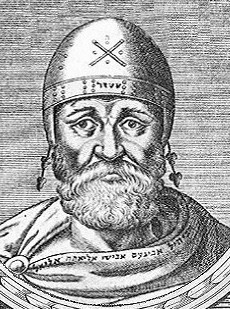
Philo of Alexandria on Remembering Moses

I've recently been thinking a bit about memory theory as applied to historical Jesus studies while I happened to be reading Philo of Alexandria and I came across a passage that has some interesting cross-over. 

The passage caught my attention for two reasons. First, Philo is introducing his two-part work "On the Life of Moses," and is focused on telling the story of the "greatest and most perfect" man (Moses 1.1). Second, Philo believes that Moses has been overlooked by educated Greeks as "not worthy of memory" (Moses 1.2) so he aims to remedy the situation with his work. Philo's expressed goal is to bring attention to the overlooked wise man of wise men.

Here is his description of his sources:
"I tell the story of Moses as I learned it, both from the sacred books, wonderful monuments of his wisdom which he has left behind, and from some of the elders of the nation. For I always have woven together the things having been spoken with those being read and on account of this I consider the life story to be much more accurate than others." (Moses 1.4)
There a number of fascinating features to this short excerpt. First, Philo expresses his view of the scrolls as "sacred [ἱερῶν]," thus investing higher status to the Pentateuch. Second, the Pentateuch is described as, "wonderful monuments of wisdom." The word for "monument [μνημεῖα]" can be used for a "tomb" or a physical memorial (Lk 11:47), which raises interesting questions about how books functioned as physical memorials. Third, Philo considers himself to have a more accurate account by combining written sources with the oral testimony of elders.

Philo's introduction shows that ancient people valued oral sources for their "histories." Furthermore, it provides some fodder for discussion for how texts functioned alongside oral testimony to provide better stories.

Friday, January 6, 2012

GNT2012 - Matthew 5

My reading the NT aloud in Greek prompts ridicule from my wife. She finds my voice stumbling over the foreign words obnoxious, yet I persist. Reading through Matthew 5 I became all the more convinced that reading aloud is good practice.

In the text of Matthew 5 itself there are numerous indictors that these are words for speaking and hearing. At the very beginning of Jesus’ most famous teaching Matthew writes, “having opened his mouth he taught them saying . . .” Matthew draws attention to Jesus’ delivery of this speech. Then throughout the teaching Jesus refers to hearing and speaking sacred words (Mt 5.21, 27, 31, 33, 38, 43) and his contrasting vocalization (Mt 5.22, 28, 32, 34, 39, 44). Exploring the way these words roll of the tongue, even inarticulately, is one step closer to hearing Matthew as the early Christians did.

I expected to see numerous textual variants in Matthew 5. After all, this is some of Jesus’ most uncompromising teaching. Yet the manuscripts have no proclivity to soften the words of Jesus or make them more palatable. Nearly all the textual variations are small changes in verb tenses or word order. There is an interesting textual variant, however, in Matthew 5.44. Earliest manuscripts (Siniaticus, Vaticanus, et. al) read, “But I say to you, ‘Love your enemies and pray for those persecuting you [προσευχεσθε ὐπερ τῶν διωκόντων ὑμας].’” Codex Bezea and some other early manuscripts reads instead of the italicized portion above, “Speak well of those cursing you [ευλογειτε τους καταρωμενους ὑμας].” Other early manuscripts read, “Do good to those hating you [καλως ποιειτε τοις μισουσιν ὑμας],” and others still, “pray for those tempting you [προσευχεσθε ὑπερ τῶν επηραζοντῶν ὑμας].” Each of these readings is very much in keeping with the difficulty of Jesus’ teaching and appears connected to closing beatitudes addressed in the second person (Mt 5.11-12). Ultimately, these additions appear to be an attempt at harmonizing this teaching with Luke’s version (Lk 6.27-28). What is clear is that these textual variants show no attempt to moderate Jesus’ difficult teaching about loving enemies

Thursday, August 4, 2011

Rethinking Ancient Reading


Pieter J. J. Botha wrote a fascinating article exploring the vast difference between contemporary and ancient reading practices. The article, “New Testament Texts in the Context of Reading Practices of the Roman Period: The Role of Memory and Performance,” published in Scriptura vol. 90 (2005) pgs 621-40, is well worth a read. I just wanted to note some highlights here.

Botha begins by painting the picture of a contemporary reading scene:
“One pulls the chair up to the desk and arranges some of the books and other papers already lying there. Then, glasses are picked up form a preferred place, cleaned [. . .], perched on the nose and steadied behind the ears to gaze at the now lucid pages. Adjustment of the study-lamp and little shifts of the chair and arms to reduce the shadows on the book follow. On reaches for a pencil or highlighter, and the soft sounds of scratching in the margins of book or notebook become audible.” (621)
This is the posture of many a contemporary reader – seated alone at a desk, wrapped in silence, bathed in incandescent light and aided by glasses. Botha observes how this picture is completely anachronistic in the first century. There was no electricity for light, no eye-glasses, no desks, and rarely was reading a silent solitary activity.

In regard to the texts themselves, Botha observes how unfriendly they are to modern reading practices. The dominant textual format—the scroll—was unwieldy and cumbersome. The visual landscape of the ancient text looks overwhelmingly cluttered to the modern eye with no paragraph divisions, punctuation or even spacing between words! “The Greco-Roman text was constructed with almost no aids to the reader, whose task it was to divide the lines correctly into words and sentences” (627).

It is not surprising, then, that ancient readers were expected to know the text before they read. Consider the orator Quintilian’s recommendation for reading,
“There is much that can only be taught by practice, as for instance when the boy should take breath, at what point he should introduce a pause into a line, where the sense ends or begins, when the voice should be raised or lowered, what modulation should be given to each phrase [. . .] I will give but one golden rule: To do all these things, he must understand what he reads.” (Inst. Orat. 1.8.1-2; Botha, 628).
Quintilian suggests practicing a text to the point that the reader knows his “reading” beforehand. Botha (drawing from J. Svenbro) suggests a fascinating illustration. He compares ancient reading practices to moderns “reading” sheet music. It is not impossible to “read” music in silence, but the most common way of doing so is by playing it on a piano to know what it sounds like (629).

Even the act of writing was drastically different in the ancient world. There were no editors, and often lengthy compositions were dictated in one sitting from memory. Pliny even mentions his preference for working out his texts in his head before dictating them to his scribe (Epist. 9.36). Or consider Cicero’s description of how the “speaking mind will forsee what is to follow” when delivering a speech (De Oratore 44.150; Botha, 633). These writing practices describe a very different literary concept that is far more oral than visual.

These ancient reading and writing practices ought to invite us to rethink ancient texts. This is especially so of NT texts which point to oral delivery as the primary means of distribution (1 Thess 5.27; Col 4.16; Rev 1.3). With these oral texts we must not fall into contemporary habits of “seeing” texts, but must have ears to hear.

Thursday, June 9, 2011

Learning to "Read" in an Oral World

Orality and Literacy: The Technologizing of the WordMost of my reading, aside from novels, is focused on biblical studies. Right in line with my interests, this summer I’m doing an independent study focused on the Apostle Paul’s education. I am chiefly interested in discovering how educated Paul was and the significance of his education for reading his letters and understanding his mission.

In the contemporary world, literacy (both the ability to read and write) is a key component of education. In fact, without this basic skill advanced education is impossible. In the ancient world, however, the ability to read was limited (perhaps 10 %) and the ability to write was scarcer still. Paul lived and wrote in a world that was dominated by the oral rather than the written word. In the modern world, the written word is such a basic part of everyday life that we have no idea how much the technology of writing influences the way we think. Imagine, for example, “a culture where no one has ever ‘looked up’ anything” (31) or an educational system with no written homework or required reading. Whatever education Paul may have had, it must have been drastically different than modern education simply by nature of the transition from an orality to literacy.

So, I picked up Walter J. Ong’s Orality and Literacy: The Technologizing of the Word in order to understand the significance of the orality-literacy shift. I’ll admit that at first glance, I was not excited about the book. It seemed a necessary evil, but much to my surprise I found the book to be a delightful read. Ong’s introduction to the field of orality studies is fascinating and in many ways paradigm shifting. In lively prose Ong shows how much writing is a technology that has reshaped how humans think.

The first chapter shows that human language is essentially oral. “Indeed, language is so overwhelmingly oral that of all the many thousands of languages [. . .] spoken in the course of human history only around 106 have ever been committed to writing to a degree sufficient to have produced literature, and most have never been written at all” (7). Further still, written texts are based on oral languages. So, while “Oral expression can exist and mostly has existed without any writing at all, writing never without orality” (8).

So, language is thoroughly oral, but as literates we have a difficult time comprehending the significance of orality and so we tend to describe oral performances using our literate category of “oral literature.” Ong has a helpful illustration of the inadequacy of this approach:
Thinking of oral tradition or a heritage of oral performance, genres and styles as ‘oral literature’ is rather like thinking of horses as automobiles without wheels. [. . .] Imagine writing a treatise on horses [. . .] which starts with the concept not of horse but of ‘automobile’ built on the readers’ direct experience of automobiles. [. . .] In the end, horses are only what they are not. (12)
Unfortunately, it is precisely in literary terms that oral traditions have been analyzed. This is problematic especially because we “read” Paul’s letters as literates when they were written to serve an oral function. The shift from orality to literacy has changed how we “read” but we are often unaware of the changes.

The second chapter of the book outlines how scholars stumbled upon the significance of orality as they analyzed Homer’s literature. This history of the subject chapter is interesting but the book gets really good in chapter three which focuses on how orality alters the mental state of humans. Consider how the orality-literacy shift changes complex problem solving. How does a person “work out” a complex problem without the assistance of writing? Further still, how would a person retain the learned information without writing to preserve it? “The only answer is: Think memorable thoughts. [. . .] you have to do your thinking in mnemonic patterns, shaped for ready oral recurrence” (34). As a result, oral traditions have patterned formulaic sayings and type-characters because without the aid of writing complex syllogisms and plot-lines cannot be retained.

One of the many results of this phenomenon is the traditional orientation of oral cultures. “Oral societies must invest great energy in saying over and over again what has been learned arduously over the ages” (41). This is directly contrasted to contemporary measures of education that reward novelty. Another example is how oral cultures tend to think in terms of situations rather than abstractions. When confronted with geometric shapes, oral cultures don’t see circles and squares but rather situated objects like plates and doors (50). Clearly, the way of thinking in an oral culture is different than that of a literate one.

Even the idea of memorization is different in oral cultures. Literate societies think of memorization as being measured “word for word,” constantly checked against a text as the point of reference. Oral cultures have no way to check a verbatim rendition. So, an oral poet will remember formulaic sayings and type characters in his retellings. Though oral cultures claim verbatim retellings, analysis of contemporary oral cultures suggests an average of 60 percent accuracy when the same story is recorded twice and the two checked against one another (61). It has been noted, however, that the accuracy of oral retellings is significantly higher in some ritual texts (62-64). Here Ong points to the textual fluidity of the Last Supper (Mt 26.26-28 || Mk 14.22-24 || Lk 22.19-20; cf. 1 Cor 11.23-25) as an indicator of the oral way of remembering in the early church (64). Orality changes the way we think about memory and this ought to significantly influence, among other things gospel studies and approaches to the so called “synoptic problem.” Memory was measured differently in the oral world.

In chapter four Ong turns his attention to the way in which “writing reconstructs consciousness.” He argues, “More than any other single invention, writing has transformed human consciousness” (77). Most significantly, writing is a technology that transforms communication from the oral-aural sensory perception to visional perception. Communication in oral situations is fundamentally different than written communication. Spoken words are always highly contextual between multiple people. Written communication, however, is a single person’s word crystallized forever in a text (100). There is no interchange or exchange. Because of this, “written words sharpen analysis, for the individual words are called on to do more. To make yourself clear without gesture, without facial expression, without intonation, without a real hearer, you have to foresee circumspectly all possible meanings a statement may have for any possible reader in any possible situation, you have to make your language work so as to come clear all by itself, with no existential context” (102-3). To illustrate his point further Ong traces the use of Latin as the premier “learned language” and rhetoric as the prime subject for much of western history (107-13). He shows that writing reshapes how humans communicate with one another.

Chapter five is concerned with the development of print culture. When the technology of writing shifts communication from an oral/aural sphere to a visual one, it creates “a shift from sound to visual space” (115). This oral to visual shift is, as chapter five argues, observable in the development of print culture. Whereas early manuscripts were focused on producing a written document usable in a primarily oral culture, today print is intended to serve a literate culture. There are two very helpful illustrations of this point. First, the concept of plagiarism is a preoccupation of a literate society and was of little concern in an oral world. “Typography had made the word into a commodity. The old communal world had split up into privately claimed freeholdings” (129; cf. 131). Stories no longer belong to groups or tribes but to individuals. The second illustration of print culture that I found quite illuminating was the development of plot-lines. This illustration is only introduced in chapter five and transitions to chapter six.

The shift from orality to literacy was first observed in literary analysis of Homer. Not surprisingly then, most studies of orality-literacy shift dynamics have focused on literature and narrative in particular. The shift is keenly observable in the development of the concept of a plot line as seen in chapter six. Today, elementary school students learn the development of a plot in terms of a story arc (139).  In the world of literature the climax of plot is the detective story (141). “In the ideal detective story, ascending action builds relentlessly to all but unbearable tension, the climactic recognition and reversal releases the tension with explosive suddenness, and the dénouement disentangles everything totally – every single detail in the story turns out to have been crucial – and, until the climax and dénouement, effectively misleading” (146). Thus, a very tight plot line allows for great complexity in character development and “plot twists” that turn out to be quite important (148-52). In the context of an oral world, however, the primary genre of oral tradition is the epic, which does not have a linear plot. Epic poetry is episodic. The story begins “in the middle of things” and can contain lengthy digressions that do not serve a specific plot development. Literate stories have intricately woven plots but oral cultures have creative ways of immersing their readers in an episodic experience.

The last chapter of Ong’s book is devoted to some theorems about how the orality-literacy shift can be applied in other fields of study. He points to implications for literary theory (157-162), deconstructionist theory (162-66), speech-act theory and reader response criticism (166-68) and, most interesting to me, the fields of social sciences, philosophy, and biblical studies (168-70). He is particularly emphatic about biblical studies,
Orality-literacy theorems challenge biblical study perhaps more than any other field of learning, for over the centuries, biblical study has generated what is doubtlessly the most massive body of textual commentary in the world. [. . .] But [. . .] biblical studies, like other textual studies, are inclined unwittingly to model the noetic and verbal economy of oral cultures on literacy, projecting oral memory as a variant of verbatim literate memory and thinking of what is preserved in oral tradition as a kind of text that is only waiting to be set down in writing (170).
Ong’s argument burns away much of the scholarly dross that has accumulated around the biblical text over centuries of studying it as a text apart from a developing oral tradition. I think this has significant implications for how we read Paul in light of developing hermeneutical traditions after his death. But alas, I digress.

There is much to commend in Ong’s book. First, it was unexpectedly readable. Filled with interesting illustrations of his points, Ong held my attention throughout. Second, the book forced me to rethink a lot of my assumptions about how I read a text and especially the biblical text. But this rethinking helps in deconstructing false assumptions and reconstructing accurate assumptions about what to expect in oral cultures. Third, Ong’s thesis is bold without being all-encompassing. He rigorously argues that the shift from orality to literacy provided a context for the development of the western world, but he does not want to relegate every development simply to the invention of writing. Orality and Literacy is a fine example of an introductory book to a paradigm-shifting subject. Students of the Bible need to learn to think in an oral world as they “read” in a historically responsible way.

Saturday, June 4, 2011

How Sacred Texts Took Shape in an Oral World

Writing on the Tablet of the Heart: Origins of Scripture and LiteratureIn a comprehensive analysis of the sociology of textuality in the ancient world, David M. Carr provides a panoramic view of the production, collection, revision and use of texts that produced the scriptures. The book, Writing on the Tablet of the Heart: Origins of Scripture and Literature is by no means a scintillating read. Still, Carr manages to work his way through Ancient Near Eastern forms of textuality and education (Part 1) all the way to the late Second Temple era (Part 2). His primary focus is how textuality and orality work together to shape cultural identity.

There is a burgeoning movement in biblical scholarship to analyze how texts functioned in a largely oral world. For most of its life critical biblical scholarship has been focused on texts within the framework of the modern print world. So, theories like the documentary hypothesis arise in which ancients are portrayed as splicing texts together as a kind of “cut and paste” editing. This sort of thing is only possible in a world where texts are easily accessed and compared. Recent scholarship, however, has begun to notice that these ancient texts were produced, transmitted, edited, and used in an oral world. This means that not only were a large majority of people illiterate, but even more significantly that texts functioned differently. Texts were intended to serve the means of an oral culture. Thus, practical dynamics of “cut and paste” editing are hardly plausible in an oral world.

Even the texts themselves are “highly reader-unfriendly” (4) written in all capital letters, without any spacing between letters, no punctuation, and no paragraph breaks. How do these reader-unfriendly texts become useful? The ancient texts were produced in such a way that “presupposed that the reader already knew the given text and had probably memorized it to some extent” (5). Thus, “readers” already knew the texts from memory and the textual copies were merely aides in the process of oral recitation. Rather than supposing a sharp dichotomy between the written text and the oral use of these texts, David Carr looks at the texts and the oral use of these texts as “joint means for accomplishing a common goal: accurate recall of the treasured tradition” (7). In order to show how these dynamics are at work, Carr focuses on ANE education (Part 1) then moves to the Second Temple era (Part 2).

Carr begins with Mesopotamia as one of the earliest and best evidenced examples of text production. The goal of this educational system was to give an elite representation of the truest form of humanity to serve the ends of the kingdom. In many ways scribal activity was concentrated to serve political administrative ends. Text reproduction took place in a context of memorized tradition that took creative license by combining memorized traditions into new master texts that were considered quite faithful to the originals (36, 44). One interesting result of this form of text reproduction is that the idea of a single authoritative text was never the ideal. “As a result, the modern attempt to produce a scholarly edition of those ancient texts that were transmitted primarily in the mind ends up producing a figment of the scholarly imagination: a ‘standard text’ with ‘variants’” (44). This is a lowest-common-denominator-text that lacks the creativity of its individual representations. So many modern “critical editions” are nothing more than a flattening of the text. In the broad scope, Carr finds the influence of this Mesopotamian scribal culture evidenced throughout the ANE (chapter 3).

Next, Carr moves to Egypt as another example of early scribal culture that was widely influential. It portrays writing as a means of overcoming memory faults. Rather than beginning with archaic lists (like in Mesopotamia), Egyptian education began with texts (68-9). Again, like in Mesopotamian scribal culture, the goal was a “memorized mastery of the cultural tradition” (75), but Egypt also shows a shift in associating textual reproduction with temple-complexes more significantly than political administrative centers (80-81). There are many overlapping similarities between Mesopotamian scribal culture and Egyptian scribal culture (81-83) but Egypt began to revere scribal activity as sacred activity (83) and develop a more prominent wisdom tradition (83). Egyptian scribal culture has significant influences on Israel (84-90).

Before turning his focus on ancient Israel specifically (chapter 6), Carr describes textuality and ancient education in Greece. It is a more difficult task because of the lack of evidence, but there is a notable use of texts for public performance. This use of texts is evidenced both in literature (95-99) and iconography (104-106). In contrast to Mesopotamia and Egypt, Greek scribal culture used an alphabetic writing system and different writing material (106). Greek culture resided textual authority in specific authors rather than developing lines of tradition (107). These authors were recited in public gatherings as a reminder of the ideals of Greek culture. This concept becomes significant for the formation of a body of "scripture" in late Second Temple literature.

In his lengthiest chapter in the first part of the book, Carr turns to scribal activity in ancient Israel (chapter 6). Literacy seems to be limited to a few elite officials in the early monarchy, and these scribes seem to be heavily influenced by the Egyptian scribal system, or perhaps trained Egyptian scribes (116-117). The cultural values of Israel, however, were not limited to these scribes but are evidenced in earlier figures like Moses, Samuel and other prophets (118-119). There is little that can be definitely said about literacy in the early period because of the lack of epigraphic evidence. Though textual education does play a prominent role in Deuteronomy, it is often wondered if this is a pious retrojection rather than a historical reality (134-142). This Deuteronomic scribal vision sought to displace other visions by focusing educational life on Torah. Carr also sees a developing “counter education” at work in the prophets (143-151). This “counter education” sought to oppose certain key educated players in the bureaucracy that had risen to power rather than the Deuteronomic system itself. Carr goes on to depict a history of textuality in Israel (161-173). The process moves from a very few educated elite to the goal of a more educated people, but this goal is more an ideal than reality.

In the second half of his book, Carr focuses on textuality and education in and around the Second Temple era. He begins with Greek education because of widespread expansion and use as a “means for legitimizing Greek overlordship” (177). In Greek culture the highest levels of education were reserved for those who mastered the Greek tradition of the classic authors. It was not necessarily the ability to read and write that set one apart as a member of the elite, but rather “the mastery of Greek tradition provided by a liberal education” (190). There was also the added educational element of the gymnasium as a “decisive maker of membership in the upper echelons of the Greek ruling class” (191). Again, the imperialism of athletic domination and elite status are palpable (191-192).

In chapter 8, Carr moves to the Hellenistic era of the Second Temple period (333 BCE – 70 CE). He sees a reoccurring theme of textual education focused on the temple and priests as textual guardians and educators. He begins with pseudepigraphic literature as the earliest evidence of this period (202-6) which shows a family based education/textuality focused on priestly figures. Next, he describes Ben Sira as an important transitional figure who while similar to apocalyptic texts, “writes in his own name, praises the contemporary priesthood, and affirms the Mosaic Torah as the decisive teaching above others” (208). He thus provides a shift to the kind of “hybridity” (211-12), seen in Egyptian scribal traditions reacting to Greek culture (cf. 193-198 esp. 197). The chapter ends with other examples of temple/priest education/textuality (212-214). Carr sees the hybridity evidenced in Egyptian reaction to Greek culture an apt parallel for Second Temple Jewish reactions to Hellenism.

Chapter 9 focuses on Qumran as a window into Jewish education and textuality. He sees the continued connection of education to the priesthood (216-220), but this vision is broadened into “one realization—or at least idealization—of a particularly literate Israel, an Israel whose holiness is not only constituted by proper observance of various regulations but also by its members’ special knowledge of sacred texts” (220). Turning to the explicitly educational texts in Qumran, Carr observes the same oral/written dynamic at work designed to educate to the degree of oral memorized repetition.

In a very brief tenth chapter, Carr looks at the evidence for textuality at work apart from the temple, particularly in the synagogue. After a brief overview of the epigraphic evidence (242-44) he turns to the literary references of Philo (244-46) and Josephus (246-50). Though these sources are dominated by the tendencies of their authors “writing in Greek and in conflictual settings,” the appearance of an identifiable set of literature as “scripture” is identifiable. This sets the stage for Carr’s final argument in chapter 11.

Carr attempts to show that the development of a specific body of Hebrew “scriptures” was the result of the Hasmonean dynasty. Though heavily influenced by Greek culture, the Hasmoneans styled themselves as an “anti-Hellenistic” movement (255, 256-8). In another example of hybridity, the Hasmoneans sought to adopt a specific body of texts that identified the Jewish culture (a Greek concept), but this body of texts needed to be in Hebrew and “pre-Hellenistic” in order for the Hasmoneans to play the part of restorers (258; cf. 260). Thus, the body of texts that became the focal point of Jewish identity was prompted by the Hasmonean political concern to identify themselves apart from Greek culture. But these texts  were drawn from a much earlier already recognized body Hebrew texts. Still, the Hasmonean scriptures displaced other texts that were recognized by other Jews (Ben Sira for example). So, scripture takes shape as resistance to Greek culture, but predicated on Greek assumptions of what it means to have a culture identity.

The implications of Carr’s ambitious work are far reaching to say the least. He has sought to completely rethink textual production, transmission, collection, revision and use of texts in light of recent scholarship on the significance of orality. This rethinking, furthermore, is not just focused on one particular period of scribal activity but the broad scope from the Mesopotamia to the late Hellenistic Second Temple period. It is bold, insightful and refreshing to see a scholar thinking outside of the usual assumptions of modern print culture. Likely, this book will be hailed as something of a watershed for years to come. At the very least, Carr has shown that the future of biblical scholarship will have to take note of the textual/oral dynamic at work in the world of the Bible and its “readers.”