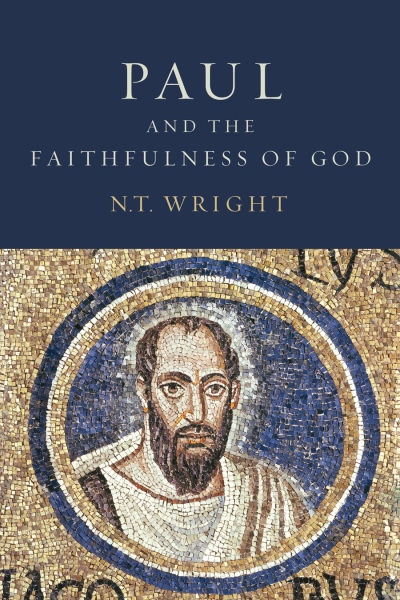
N. T. Wright's much anticipated book on Paul, the fourth volume of his Christian Origins and the Question of God Series is scheduled to be released November 1st. Over at Fortress Press, a preview of Paul and the Faithfulness of God has been made available for free.
The free excerpts include:
Table of Contents
Preface
Chapter 1 - Return of the Runaway?
I for one cannot wait to get my hands on Wright's book. Has there been a more anticipated book in biblical studies?
Showing posts with label Paul. Show all posts
Sunday, September 22, 2013
Friday, May 17, 2013
Stoicism and Colossians
Reading through Colossians closely and grading the exegetical papers for my Advanced Greek Course, I've been struck by the similarities between Colossians and Stoicism.
(the bust to the left is of Epictetus, one of my favorite Stoics and a close contemporary of Paul)
I know there has been a lot of work on Paul and Stoicism from Troels Engberg-Pederson and a few other monographs comparing Stoic thought to Romans and the "Body of Christ" metaphor. But I've yet to see anything that explicitly compares and contrasts Colossians to early/middle Stoic literature.
It would seem to me that Colossians would be a very helpful point of comparison. Does anyone know of work or a person comparing the two? I'm pretty ignorant of Colossians scholarship since it's never been a major research interest of mine, so perhaps I'm just really late to a party that's already over, but I thought I would check.
Thursday, May 2, 2013
Meeting in the Air (1 Thess. 4:15-17)
In preparation to teach on 1 Thessalonians 4:13–18, I read John Chrysostom’s Homily on the passage. There were lots of interesting insights, but I want to point out only one that I think has significant value for contemporary readers.
John Chrysostom, for those unfamiliar, is one of great “Doctors of the Church” in the East who lived from around 347–407 CE. He was made Bishop of Constantinople against his will in 398 and worked tirelessly to preach the Scriptures to reform the nominally Christian culture in which he found himself. His most enduring legacy is found in his many sermons and exegetical writings. Thankfully, we have a number of writings on Paul’s letters, including a collection of homilies on 1 Thessalonians.
Commenting on 1 Thessalonians 4:15–17, in his eighth homily in 1 Thessalonians, Chrysostom asks an important question: “If he [Christ] is about to descend, for what reason will we be caught up?” Many modern readers fail to ask this question and simply assume that believers “go to heaven.” The imagery here, however, is not of “rapture” (of the Left Behind sort), or final departure to the pie in the sky, but a welcome party for the arrival of Jesus. Chrysostom’s answer to his question about why Jesus comes down and we rise up is quite helpful:
“The reason is honor. For when a king enters a city those in honor go out to meet him, but those condemned remain inside for judgment. When a loving father comes, the children, and those worthy to be children, go out on a chariot in order to see and kiss him, but those having offended him remain in the house.”The “meeting” that occurs as Jesus comes down and believers go up is a welcome party for Jesus that bestows vindicating honor on the saints. It refers to believers going up to meet Jesus, only to then return to earth for final judgment.
The word “meet” is used in precisely this same way elsewhere in the New Testament. In Acts 28 Paul journeys to Rome to await trial before the Emperor. When Roman Christians hear of Paul’s arrival they leave the city to meet him, with the obvious intention to return with him to Rome. In Jesus’ famous parable of the ten virgins there are five wise virgins who have enough oil in their lamps and five foolish ones who do not. The virgins are waiting to meet the bridegroom only to be taken to the ultimate destination of the wedding banquet.
Meeting Jesus in the air is, as Chrysostom points out, a vindication of those who know their king (cf. Josephus, JW 7.100–2). They celebrate his arrival by publicly meeting him on the journey down to welcome and honor him.
Sunday, March 31, 2013
The Good News about Easter - We're NOT going to Heaven
At
least not as our ultimate destination.
Unfortunately,
most Christians are confused about what scripture teaches about life after
death. Imprecise language in the pulpit and popular worship music isn’t helping
the situation much either. The hymn, “I’ll Fly Away,” is a perfect example of
inaccurate eschatology,[1]
but most people know it far better than 1 Corinthians 15. Preachers are often
fond of proclaiming their excitement about going to heaven. There is even a
best-selling book describing a young boy’s description of heaven based on his
near-death experience.[2]
As will become clear below, I’m not trying to discount Christian hope in life
beyond the grave. I’m also not trying to deny that heaven is a place for
believers, but I do want to clarify it in light of what Scripture teaches, "heaven" is not our ultimate destination.
Most
Christians think of heaven as the place you go to be with God forever after
you die. Typically it is thought of as a city in the clouds where
people spend time with God. But this is a terribly incomplete description of what the Bible
teaches about life after death. It is a description of eschatology that ignores
the significance of Jesus’ resurrection as the foundation of Christian hope.
The early Christians believed that Jesus was
raised from the dead and that eventually they would be too. The Christian hope
is that God will raise believers from the dead when he judges the earth at the
end of time. The early believers did not eagerly desire to “go to heaven.”
Instead, they longed to participate in the resurrection of Jesus. Heaven is
merely a pit stop on the way to a more glorious future – a new earth filled
with God’s presence!
Consider some of these passages:
“38 For I have come down
from heaven not to do my will but to do the will of him who sent me. 39 And
this is the will of him who sent me, that I shall lose none of all that he has
given me, but raise them up at the last day. 40 For my Father’s will
is that everyone who looks to the Son and believes in him shall have eternal
life, and I will raise him up at the last day.” (John
6.38-40)
In his “bread of
life” sermon Jesus declares that it is God’s plan to raise the dead and Jesus
will participate in raising the dead! This is a bold declaration that
surprisingly will be previewed in the resuscitation of Lazarus in John 11.
To the Roman church Paul wrote,
“And if the Spirit of the one who
raised Jesus from the dead dwells in you, the one who raised Christ from the
dead will also give life to your mortal bodies through his Spirit dwelling
within you.” (Romans 8.11)
Romans 8 is a
masterful description of how our hope in God’s future shapes how we live in the
present. Paul is emphatic that if we are believers then we have the Holy Spirit
(Rom 8.9), which in turn allows us please God—an impossible calling without the
Spirit of God dwelling in us (Rom 8.1-8).
To the Philippians, Paul described his overwhelming desire was:
“10 to know [Christ] and the power of his
resurrection and the sharing in his sufferings, being conformed to his death, 11
if somehow I might attain to the resurrection from the dead. . . 20 For
our citizenship is in heaven and from there we eagerly await a Savior – the
Lord Jesus Christ, 21 who will transform our lowly bodies to the
same form of his glorious body by the energy which enables him to subject all
things to himself.” (Philippians 3.10‒11, 20‒21)
Paul describes
his hope as the resurrection (Phil 3.10) and confirms that it the hope of all
believers to have our bodies transformed (Phil 3.21).
Jesus, speaking to his host a dinner
party said, “12 When you give a luncheon or dinner, do not invite
your friends, your brothers or relatives, or your rich neighbors; if you do,
they may invite you back and so you will be repaid. 13 But when you
give a banquet, invite the poor, the crippled, the lame, the blind, 14 and
you will be blessed. Although they cannot repay you, you will be repaid at the
resurrection of the righteous.” (Luke 14.12‒14)
Here again, we
see Jesus describing how we live today as relevant for the resurrection!
The hope of
resurrection is pervasive throughout the apostolic preaching (Acts 2.22-32, 36; 3.13-16; 4.33; 5.29-32; 10.39-43; 13.30-39;
17.2-3, 18, 31-32; 23.6-8; 24.14-16, 21; 26.6-8, 23). The most detailed
passage on resurrection is found in 1 Corinthians 15. I would of course suggest
reading the entire passage, but there is only space here to quote portions of
it:
14 And if Christ has not been raised, our
preaching is useless and so is your faith. 15 And we are then found
to be false witnesses about God, for we have testified about God that he raised
Christ from the dead. [. . .] 17 And if Christ has not been raised,
your faith is futile; you are still in your sins. 18 Then those also
who have fallen asleep in Christ are lost. 19 If only for this life
we have hope in Christ, we are to be pitied more than all men. 20
But now Christ has indeed been raised from the
dead, the firstfruits of those who have fallen asleep. 21 For since
death came through a man, the resurrection of the dead comes also through a
man. 22 For as in Adam all die, so in Christ
all will be made alive. 23 But each in his own turn: Christ, the
firstfruits; then, when he comes, those who belong to him.
35 But someone may ask, ‘How are the dead raised? With
what kind of body will they come?’ . . .
As usual, Paul answers his own
question.
It [the body] is
sown perishable, is raised in imperishability; 43 it is sown in
dishonor, it is raised in glory; it is sown in weakness, it is raised in power;
44 it is sown a natural body, it is raised a spiritual body.
He goes on,
51 Listen, I tell you a mystery: All will
not fall asleep, but all will be changed— 52 in a flash, in the
twinkling of an eye, at the last trumpet. For the trumpet will sound, the dead
will be raised imperishable, and we will be changed. 53 For the
perishable must clothe itself with the imperishable, and the mortal with
immortality. 54 When the perishable has been clothed with the
imperishable, and the mortal with immortality, then the saying having been written
will be, “Death has been swallowed up in victory” [Isa 25.8] (1 Corinthians
15:14-15, 17-23, 35, 42-44, 51-54)
Notice the significance of Jesus’
resurrection for Paul. If Christ is not raised, our faith is useless (v 14), we
are lying about God (v 15), we are still dead in our sins (v 17), anyone who
has put hope in Christ believed a stupid lie (v 18) and Christians should be
pitied as fools (v 19). Apparently, there were some Christians in Corinth
suggesting that there is no resurrection (1 Corinthians 15:12-13, 16). Jesus’
resurrection is, according to Paul, the foundation of Christian hope. Not only
does it define what Christians believe happened to Jesus in the past, but it
shapes their hope for the future – resurrection on the
last day!
If
resurrection is something that happens at the return of Jesus, as 1 Corinthians
makes clear, then what happens to believers when they die? According
to the New Testament, when believers die they are in the presence of Christ (2
Cor. 5.8; Phil 1.23; Rev 6.9-11; 7.14-17; 14.13; 20.1-6). Then, at the end of
time, when God judges all of humanity, the righteous will be given new glorious
bodies and the wicked are judged. Resurrection properly describes the stage of
humans receiving new bodies at the final judgment. Until that great day, those
who have “fallen asleep” in death are in the presence of Christ awaiting the
full glory of new bodies.
Because he was
raised, we believe we will be raised. Our bodies will be transformed to be like
his. The prayer we learned from Jesus will be answered. God’s kingdom will have
come and his desires will be done on earth as they are in heaven (Matt 6.10).
Finally, John’s vision will be fulfilled,
“Now the dwelling of God is with men, and he will live with them. They will be his people, and God himself will be with them and be their God. 4 He will wipe every tear from their eyes. There will be no more death or mourning or crying or pain, for the old order of things has passed away.” (Rev 21.3-4)
[1]
Eschatology is
broadly defined as “the study of last things.” It comes from two Greek words‒ eschatos and logos. Eschatos means
“end.” It can refer to the last in an order (1 Cor. 15.8), the “last” penny of
a debt (Matt. 5.26) or “end” of the earth as in the “furthest region” (Acts 1.8).
Logos means “word,” “teaching,” or
“study.” The word “Eschatology” did not come into existence until 1844. It was
developed by theologians to try and describe a branch of systematic theology.
[2]
Todd Burpo with Lynn Vincent, Heaven is
for Real: A Little Boy’s Astounding Story of his trip to Heaven and Back,
(Nashville, TN: Thomas Nelson, 2010).
Labels:
Easter,
eschatology,
heaven,
Jesus,
Paul,
Resurrection
Saturday, December 15, 2012
New "Must Read" on Paul's use of Scripture
There are a lot of fantastic books about how Paul used the Jewish scriptures, which is still a fairly recent area of research in NT scholarship. Some "must reads" include Richard Hays's Echoes of Scripture in the Letters of Paul, Francis Watson's Paul and the Hermeneutics of Faith, and Christopher Stanley's Paul and the Language of Scripture. Not to mention the monographs of Dietrich-Alex Koch (Die Schrift als Zeuge des Evangeliums) and J. Ross Wagner (Heralds of the Good News). All of these books were written within the last forty years and two of them written in the last ten years. Each of these studies makes crucial contributions to understanding how Paul employed scripture, but there is a new "must read" that merits serious attention from all interested parties.
This year at SBL I picked up Matthew Bates's The Hermeneutics of Apostolic Proclamation: The Center of Paul's Method of Scriptural Imagination and I am convinced this book belongs on the same shelf as Hays, Watson and Stanley. I'm not finished with it yet, still a couple chapters left, but I have been impressed at every turn. The book is the revision of Bates' Notre Dame dissertation written under David Aune with examiners John P. Meier and Brian Daley. He offers a truly original contribution that is both ambitious and convincingly argued.
I plan to offer a full review when I'm finished with the book, but for now I'm officially calling for an SBL panel review with respondents Richard Hays, Christopher Stanley, and Francis Watson. A guy can dream . . .
tolle lege
This year at SBL I picked up Matthew Bates's The Hermeneutics of Apostolic Proclamation: The Center of Paul's Method of Scriptural Imagination and I am convinced this book belongs on the same shelf as Hays, Watson and Stanley. I'm not finished with it yet, still a couple chapters left, but I have been impressed at every turn. The book is the revision of Bates' Notre Dame dissertation written under David Aune with examiners John P. Meier and Brian Daley. He offers a truly original contribution that is both ambitious and convincingly argued.
I plan to offer a full review when I'm finished with the book, but for now I'm officially calling for an SBL panel review with respondents Richard Hays, Christopher Stanley, and Francis Watson. A guy can dream . . .
tolle lege
Thursday, December 6, 2012
Making Sense of Ancient Readers
I just finished a review of Jonathan D. H. Norton's excellent monograph, Contours in the Text: Textual Variation in the Writings of Paul, Josephus and the Yahad for the upcoming edition of the Stone-Campbell Journal. I found the book an exemplary monograph, razor-sharp in its focus, judicious in exegetical decisions, cautious about conclusions and a truly original, creative argument. I also found it extremely difficult to write a review of a PhD dissertation for a broader audience, but a good exercise nonetheless.
I will post the review here when it is released, but for now I want to highlight the main argument, which I consider quite convincing. The primary question Norton is seeks to answer is: was Paul aware of different textual traditions? One of his key points is that the debate has been based on anachronistic approaches to textual plurality. The organization of manuscripts into “text-types” is a modern tool used to classify and organize “major textual lineages of transmission,” but these categories “do not correspond to any ancient copy” (41). Norton thinks that the high degree of textual fluidity in the first century, the existence of variant copies in the same location, and the genre of “rewritten Bible” all suggest that ancients were well aware of the “multivalent” character of copies while distinguishing “between copies [. . .] and the abstract body of the work itself” (44). Thus, ancients were aware of textual plurality, but they did not conceive of it in modern terms.
The dominant argument against Paul’s awareness of textual plurality has come from Dietrich-Alex Koch and Christopher Stanley who employ what Norton calls the “suitability argument” (47-48, cf. 153-61). This argument assumes that Paul’s citations were chosen to support his arguments and that some citations would have been more effective had he cited a variant reading (examples: Rom 9.25 [Hos 2.1LXX]; Rom 11.26 [Isa 59.20]; 1 Cor 3.19 [Job 5.13]; 1 Cor 14.21 [Isa 28.11]; 1 Cor 15.54 [Isa 25.8]). From these instances, which Norton thinks “rarely support” the suitability argument, “Koch and Stanley generalize [. . .] that Paul always cited his sources uncritically” (47). In opposition, Norton argues, “In some cases citations play more than a purely rhetorical role. The citation is indispensable to Paul’s logic, that is, Paul’s appeal to the passage logically structures his argument and one could not remove such a citation without disrupting the coherence of the argument” (47).
Not only are some texts crucial to Paul's logic, but Norton questions the way Paul's citations have been evaluated. Typically, Paul's citations are compared based on their lexcial similarity to Old Testament text forms (Old Greek, Masoretic Text,
Aquila, Theodotian, Symmachus, etc.). Instead of basing comparison on lexical
similarities, however, Norton astutely suggests comparisons
should be based on “semantic criterion.”
The basis of Norton’s argument is twofold. First, it has been shown, most definitively by Christopher Stanley, that ancient writers “frequently altered the wording of their sources for rhetorical, stylistic and theological purposes” (51). Thus, lexical changes are not necessarily an indicator of Paul's source, but might simply reflect his alterations. Second, different text forms of a given passage can convey the same meaning in distinct lexical forms, making them virtually the same in the view of an ancient reader.
Norton highlights a couple of examples to make his point about the need to move away from lexical critiera for measuring textual variation. The first is Genesis 2.24, cited by Paul in 1 Corinthians 6.16. It reads in the LXX, “The two will be one flesh” while the MT reads “they will be one flesh.” The lexical difference (addition of “the two” in the LXX) does not alter the meaning of the text in the slightest. Conversely, it is also often the case that distinct text forms of the same passage convey “completely different senses” (51). Here Norton contrasts the “sense contours” of Habakkuk 2.16 evidenced variously as, “You will be sated with shame instead of glory. Drink, you yourself, and be circumcised/stagger” (Hab 2.16 [MT]/1QpHab. 11.8-9). In these variant forms, the meaning of the text is changed. Norton's point, and it is a crucial one, is that discerning ancients’ awareness of textual forms should focus on semantic criterion, what he calls “sense contours,” rather than the modern text-critical concentration on lexical criterion.
In thinking about how ancient readers handled texts the precise wording becomes less significant than the "sense" of the text . . .
What might this indicate about how textual criticism ought to be practiced?
Is it now crucial to analyze not only the forms of the text that Paul cites, but also the forms he doesn't? What might that tell us about his approach to these texts?
tolle lege
I will post the review here when it is released, but for now I want to highlight the main argument, which I consider quite convincing. The primary question Norton is seeks to answer is: was Paul aware of different textual traditions? One of his key points is that the debate has been based on anachronistic approaches to textual plurality. The organization of manuscripts into “text-types” is a modern tool used to classify and organize “major textual lineages of transmission,” but these categories “do not correspond to any ancient copy” (41). Norton thinks that the high degree of textual fluidity in the first century, the existence of variant copies in the same location, and the genre of “rewritten Bible” all suggest that ancients were well aware of the “multivalent” character of copies while distinguishing “between copies [. . .] and the abstract body of the work itself” (44). Thus, ancients were aware of textual plurality, but they did not conceive of it in modern terms.
The dominant argument against Paul’s awareness of textual plurality has come from Dietrich-Alex Koch and Christopher Stanley who employ what Norton calls the “suitability argument” (47-48, cf. 153-61). This argument assumes that Paul’s citations were chosen to support his arguments and that some citations would have been more effective had he cited a variant reading (examples: Rom 9.25 [Hos 2.1LXX]; Rom 11.26 [Isa 59.20]; 1 Cor 3.19 [Job 5.13]; 1 Cor 14.21 [Isa 28.11]; 1 Cor 15.54 [Isa 25.8]). From these instances, which Norton thinks “rarely support” the suitability argument, “Koch and Stanley generalize [. . .] that Paul always cited his sources uncritically” (47). In opposition, Norton argues, “In some cases citations play more than a purely rhetorical role. The citation is indispensable to Paul’s logic, that is, Paul’s appeal to the passage logically structures his argument and one could not remove such a citation without disrupting the coherence of the argument” (47).
The basis of Norton’s argument is twofold. First, it has been shown, most definitively by Christopher Stanley, that ancient writers “frequently altered the wording of their sources for rhetorical, stylistic and theological purposes” (51). Thus, lexical changes are not necessarily an indicator of Paul's source, but might simply reflect his alterations. Second, different text forms of a given passage can convey the same meaning in distinct lexical forms, making them virtually the same in the view of an ancient reader.
Norton highlights a couple of examples to make his point about the need to move away from lexical critiera for measuring textual variation. The first is Genesis 2.24, cited by Paul in 1 Corinthians 6.16. It reads in the LXX, “The two will be one flesh” while the MT reads “they will be one flesh.” The lexical difference (addition of “the two” in the LXX) does not alter the meaning of the text in the slightest. Conversely, it is also often the case that distinct text forms of the same passage convey “completely different senses” (51). Here Norton contrasts the “sense contours” of Habakkuk 2.16 evidenced variously as, “You will be sated with shame instead of glory. Drink, you yourself, and be circumcised/stagger” (Hab 2.16 [MT]/1QpHab. 11.8-9). In these variant forms, the meaning of the text is changed. Norton's point, and it is a crucial one, is that discerning ancients’ awareness of textual forms should focus on semantic criterion, what he calls “sense contours,” rather than the modern text-critical concentration on lexical criterion.
In thinking about how ancient readers handled texts the precise wording becomes less significant than the "sense" of the text . . .
What might this indicate about how textual criticism ought to be practiced?
Is it now crucial to analyze not only the forms of the text that Paul cites, but also the forms he doesn't? What might that tell us about his approach to these texts?
tolle lege
Friday, January 6, 2012
Barclay on Offensive Grace
I first discovered Todd Still while working on a Thessalonians paper. I found his book Conflict
at Thessalonica a model of biblical scholarship. He is rigorously historical,
careful in his judgment and pays close attention to the text. Thus I was
delighted to stumble upon a volume of essays he edited focusing on the old question
of the relationship between Jesus and Paul, Jesus
and Paul Reconnected: Fresh Pathways to an Old Debate. The list of
contributors includes some of the best NT scholars alive: John M. G. Barclay, Stephen
Westerholm, Bruce W. Longenecker, Markus Bockmuehl, Francis Watson and Beverly
Roberts Gaventa.
John Barclay’s article, “‘Offensive
and Uncanny’: Jesus and Paul on the Caustic Grace of God” draws from Bultmann
and Sanders to ask why Jesus and Paul were offensive to their contemporaries.
Barclay still considers this question largely unanswered. His suggestion,
surprising in a post-Sanders world, but argued brilliantly is that the scandal
of both Jesus and Paul was “the enactment of the deeply subversive and sharply
caustic grace of God” (5). Indeed, “both enact and express a paradigm of God’s
grace that is simultaneously welcoming to the lost outsider and deeply challenging
to the insider” (17).
Barclay points out that
though Sanders refers to the availability of forgiveness in Jewish literature (Jesus and Judaism, 202-3), Sanders fails
to take note of how Jesus’ enactment of that grace is actually portrayed in the
gospels themselves. “As the parable indicates, Jesus is dealing with people who
can never expect to find social acceptance, the irretrievably wicked, who are
permanently subject to hostility or suspicion” (9). Though ideally these sinner-folks
had the availability of forgiveness, it was practically speaking socially
problematic. It is not that Jesus introduced a new idea of “grace,” but rather he
enacted the grace latent in Israel’s traditions. “This dramatic act of generosity
emerges out of the ethos of Israel’s traditions and scriptures, but
simultaneously threatens to destabilize the categories and norms by which
righteousness is defined and covenant maintained” (11). So, the father who
loves the hard-working elder son is not celebrating the wickedness of the
younger son. Rather, he is attempting to uphold that standard of just activity
while simultaneously welcoming the younger son. This, in turn, forces the elder
son to submit to the scandal of welcoming back his wicked brother. Here is the
subversive grace of God on display.
The revelation of the gospel
is equally destabilizing for Paul, who prior to Damascus is the quintessential “elder
brother” – righteous according to the law (Phil 3.6). Yet, it was precisely
this righteousness that prevented Paul from seeing the grace of God at work in
the Messiah. In Barclay’s brief reading of Rom 9-11 he observes the way in
which it is God’s prerogative to act with unsettling grace (Rom 9.6-29) which
has become a “stone of stumbling” for Israel (Rom 9.30-10.21). In the end, Paul
argues that no-one can rest on their elective laurels but only the divine grace
(Rom 11.1-32). Thus, “Romans 9-11 is about the bonfire of the vanities, when
every social, legal, ethnic, and political support is stripped away by the
acerbic, but ultimately redemptive, grace of God” (16). This revelation of
grace forces Paul to rethink social identity for the people of God. He can no
longer operate under Torah but a new kind of social status quo that operates
with caustic grace, a grace that is everywhere imprinted in Torah but easily missed
by righteous eyes. Barclay as usual is cautious, not suggesting that Paul got
the idea from Jesus but simply noting the striking “congruity between Jesus and
Paul on this issue” (17). As Barclay sees it, the enactment of grace is the
scandal of Jesus and Paul.
Friday, September 23, 2011
Exciting Fall
It’s
the fall again, my favorite time of year. As a sports fan fall is exciting because football is available for mass consumption every weekend at every level, from high school boys to professional athletes. Fall is a fantastic season
because of the colors, smells and temperatures. Summer heat gives way to breezy
sweat-shirt weather. The rich green
leaves yield to bright yellows, brilliant reds and explosive oranges. The scent of burning charcoal
briquettes wafts from tailgates and backyards. The reason I love fall most is
the beginning of a new academic year. New students are beginning the journey.
Seasoned students are starting the routine again. It’s just a wonderful time to
be studying.
This
fall I embark on my newest and most challenging research project yet – my
thesis. For the sake of what I hope this project will become, I will only say
that it concerns Paul’s use of the OT in Romans, and it’s not focused on Romans
1-4 or 9-11. Intrigued? I hope so.
An
important part of producing a good thesis is having helpful readers to provide
advice, critique and encouragement at appropriate times. Despite the untimely
loss of my primary advisor in Dr. Robert Lowery to a lengthy battle with
cancer, I am thankful to have Dr. Anthony Le Donne as my primary reader.
Anthony is an accomplished scholar who specializes in Jesus studies and Second
Temple Judaism. His PhD dissertation, published as The
Historiographical Jesus, focused on social memory and historiography
applied to historical Jesus studies, which he wrote under James Dunn and John
M. G. Barclay at Durham. His more recent book, Historical
Jesus: What we can know and how we can know it?, is a popular-level
account of what social memory can teach us about Jesus. Needless to say,
Anthony is an accomplished scholar.
Anthony
also happens to be an incredibly generous person. He has been an invaluable
guide in navigating this research project already. After challenging me to
produce a “history of interpretation” on my passage, Anthony encouraged me to
do an inductive study of Romans and write a paper articulating how my passage
fits and functions in Romans. I’m in the middle of this project now and it has
been an extremely helpful exercise. Even if the entirety of the final product
does not end up in my thesis it has been crucial to solidify my own thoughts.
My
second reader, who just recently agreed, is Dr. Mark Reasoner. I do not know
Dr. Reasoner personally, and had only passing familiarity with his work until
he agreed to participate in this project. Dr. Reasoner wrote his dissertation The
Strong and the Weak on Rom 14.1-15.13 under H. D. Betz at University of
Chicago and it was published in the prestigious Society for New Testament
Studies Monograph Series through Cambridge. His most recent book, Romans
in Full Circle provides a history of interpretation on some major texts
in Romans. I am excited for our first face-to-face meeting in October.
I
am beyond grateful to have these two fine scholars interested in my project. I
only pray that my collected work, offered for their critique would be acceptable.
Perhaps by God’s will we might be refreshed together in Paul’s master epistle and
God’s grace.
Tuesday, September 13, 2011
PhD Dissertation on Paul's use of OT Available for Free
Pastor-scholar Brian J. Abasciano has done a great service and made his PhD dissertation available online, for free no less. It baffles me that PhD dissertations are so difficult to access when they ought to represent some of the best work available. Of course, I do realize that these projects are intended to be converted into books, which Abasciano did. In fact, you can purchase the published version from the publisher for a mere $ 170! Or, you could check out Abasciano's expanded work for free.
Basically, Abasciano follows Richard Hay's argument in Echoes of Scripture that when Paul cites or alludes to an OT passage he his drawing from the larger context of the passage. He also follows Hays's criteria for hearing echoes of Scripture, though he does make expansions to it. In sum, he develops a very clear method for approaching Paul's use of the OT. Abasciano is currently working to expand his thesis to cover all of Romans 9-11, which he hopes will result in the most in depth treatment of the text anywhere.
I'm very much looking forward to interacting with Abasciano's dissertation as I develop my thesis on Romans and as he publishes his lengthy treatment. Until then curious readers should check out a review of Abasciano's dissertation (the published version) by Steve Moyise here. Both Abasciano and Moyise are scholars who take Paul seriously as he interacts with the OT.
Basically, Abasciano follows Richard Hay's argument in Echoes of Scripture that when Paul cites or alludes to an OT passage he his drawing from the larger context of the passage. He also follows Hays's criteria for hearing echoes of Scripture, though he does make expansions to it. In sum, he develops a very clear method for approaching Paul's use of the OT. Abasciano is currently working to expand his thesis to cover all of Romans 9-11, which he hopes will result in the most in depth treatment of the text anywhere.
I'm very much looking forward to interacting with Abasciano's dissertation as I develop my thesis on Romans and as he publishes his lengthy treatment. Until then curious readers should check out a review of Abasciano's dissertation (the published version) by Steve Moyise here. Both Abasciano and Moyise are scholars who take Paul seriously as he interacts with the OT.
Saturday, August 27, 2011
How Educated was Paul?
The
introduction to my most recent paper:
At least since
the third century Christians have been fighting the accusation of anti-intellectualism.
Celsus described Christian doctrine as so “vulgar” that it was only able to
sway the ignorant (Against Celsus,
1.27). He accuses the Christians of preying on the least educated people in the
ancient world, “children” and “certain women as ignorant as themselves” (3.55).
Origen admits that the apostles were not educated, but meets this accusation
with an argument from Paul’s letter to the Corinthians,
It was by help of a divine power that these men taught Christianity, and succeeded in leading others to embrace the word of God. For it was not any power of speaking, or any orderly arrangement of their message, according to the arts of Grecian dialectics or rhetoric, which was in them the effective cause of converting their hearers.[1]
Origen, the
Christian intellectual force of the third century, responds to
anti-intellectual critiques with an argument from Paul. It is widely known that
Origen was extremely well educated, but what of Paul?
The question of
Paul’s education has been broached many times with varying conclusions. Adolf
Deissmann was convinced Paul was “not one of the literary upper classes, but
came from the unliterary lower classes and remained one of them.”[2]
In comparison with Philo, Mary Andrews argued, “Paul cannot be rated among the
intellectuals of his day.”[3]
In contrast, E. A. Judge argued that while the degree of Paul’s education is “tantalisingly
unclear [sic.]” he certainly had a
good measure of it, because “he reacted powerfully against the perversion of
human relations which he saw inculcated by the ideals of higher education.”[4]
Most recently, Paul’s education has been evaluated fairly high in order to
account for his use of the OT.[5]
Despite these studies there is not much of a consensus regarding Paul’s
educational background.
[1] The Ante-Nicene Fathers Vol. IV : Translations of the writings of the
Fathers down to A.D. 325, eds. Alexander Roberts, James Donaldson and
Arthur C. Coxe (Oak Harbor, CA: Logos Research Systems, 1997) 424.
[2] Paul: A Study in Social and Religious History, trans. William E.
Wilson (New York: Harper & Brothers, [1912] 1957) 48.
[3] Mary E. Andrews, “Paul, Philo,
and the Intellectuals,” JBL 53 no. 2
(1934): 166.
[4] E. A. Judge, “The Reaction
Against Classical Education in the New Testament,” ERT 9 no. 2 (1985): 170 and 174 respectively.
[5] Stanley Porter and Andrew W.
Pitts, “Paul’s Bible, His Education and his Access to the Scriptures of
Israel,” JGRChJ 5 (2008): 9-40.
[6] Ronald F. Hock, “Paul and
Greco-Roman Education,” Paul and the
Greco-Roman World: A Handbook, ed. J. Paul Sampley (Harrisburg, PA: Trinity
Press International, 2003) 198 citing 2 Cor 11.6.
Friday, July 8, 2011
Paul and Ancient Letter Writing
Letters have had a huge
impact on my life. At the beginning of the summer of 2004 I met a girl in
Texas. Though I had recently sworn off relationships, I was enchanted. Unfortunately
for our blooming romance, my summer was committed to traveling around the
country. For the next eight weeks I moved every Saturday shuffling from one summer
camp to another. These camps lacked the technologies of modern communication. I
had no cell service or wireless internet. In fact, I didn’t own a cell phone
and high speed internet was still a novelty, certainly not available in the rural areas
where I worked. Landlines charged exorbitant rates for long distance calls and
I was a poor college student. Still, I could not risk having no contact for two
months. So, I wrote letters . . . lots of letters. She wrote me letters too. It
turned into quite a collection. It also built the foundation for a relationship
that would eventually become a marriage.
That summer was probably the
only time in my life I worried about the aesthetics of my handwriting. As I
reflect on that process, it seems like ancient technology. Since then, I have
not penned a single letter. Anymore, I never write anything by hand except the
occasional illegible signature. Contemporary
literate communication is now conducted through almost entirely electronic
means. It is fascinating to think about how drastically different communication
is today than it was just seven years ago. To consider the literary communication
of the early Christians is to step back almost 2,000 years. As one would expect,
the technologies and conventions involved were even more unlike today.
Unfortunately, we often pay
no attention to letter writing practices in the ancient world. How did people
communicate across vast distances without phones or telegraphs? Letters of
course! But how did most people communicate with letters when the vast majority
of the population was illiterate? Interpreters usually give no thought to the
technology and conventions involved in ancient letter writing. As a result, we
mistakenly import our cultural and technological assumptions into Paul’s
letters. We picture the Apostle sitting at a desk scratching on paper in
silence, deep in theological thought. Then, Paul rushes the letter to the nearby
post-office and the process is complete. E. Randolph Richards in Paul and First-Century Letter Writing: Secretaries, Composition and Collection provides a fascinating analysis of
the historical processes involved in ancient letter writing. Throughout his analysis
Richard illuminates Paul’s letter writing practices. The result is a uniquely
insightful picture of Paul’s letters were written and thus ought to be
interpreted.
After a brief introduction to
the topic of ancient letter writing, Richards spends his first chapter showing how
modern portraits of Paul, both popular and academic, are rife with anachronistic
assumptions. Paul’s letters were not lone productions scratched out in silence
as Paul conjured them in his head, only to be mailed the next day. The rest of
the book is spent analyzing ancient letter production from the evidence of Cicero,
papyrus letter collections and occasionally Seneca. Richards’ book is
thoroughly documented and provides explanations that are based on historical
precedent rather than modern assumptions.
Summary of Chapters:
- Chapter 2: Richards places Paul in the larger context of the first century letter writing. Most uniquely, he suggests that Paul’s “coauthors” must be taken into account as active participants in producing the letters.
- Chapter 3: How does one write without pens? Here Richards provides an overview of the nuts and bolts of letter composition describing the writing materials, rough drafts and final products.
- Chapter 4: Richards describes the involvement of secretaries (paid letter writers) who were an almost universal part of ancient letter writing process. Here Richards shows that there was a spectrum of influence the secretary would wield ranging from little more than transcriber to full blown composer. “The role played by the secretary depended on how much control the author exercised at that particular moment in that particular letter, even shifting roles with the same letter” (80).
- Chapter 5: Here Richards explores Paul’s use of secretaries. The letters explicitly mention secretaries six times (Rom 16.22; 1 Cor 16.21; Gal 6.11; Col 4.18; 2 Thess 3.17; Phlm 19). For the most part, Richards considers Paul’s use secretaries to be in the middle of the spectrum of influence as more than a transcribers but ultimately submissive to Paul’s literary will.
- Chapter 6: Richards outlines criteria for identifying “interpolations” or preformed material in Paul’s letters. He concludes, “Even though this material was non-Pauline, it was not un-Pauline or post-Pauline. The material was inserted during the letter’s composition and thus had Paul’s ultimate authorization” (108).
- Chapter 7: Having identified interpolations, Richards provides explanations for how various preformed material was woven into Paul’s letters to produce a complete letter. “The arguments went were [Paul] intended them to go; the conclusions were what Paul intended to reach. Nevertheless, the smaller, quieter voices of others can still be heard in his letters” (120).
- Chapter 8: Richards suggests that Paul’s letters reflect neither the top nor bottom of the literary scale of ancient letters. Rather, “Paul’s fall closer to the middle of the spectrum and reflect a Jewish subculture” (140).
- Chapter 9: Any description of Paul’s epistolary style must recognize the length of time involved in letter composition, the use of secretaries and the presence of coauthors. Richards even suggests that stylistic statistical analysis indicates the kind of diversity one would expect in thirteen letters written in these circumstances.
- Chapter 10: Describes the process (in terms of time and cost) by which letters were prepared to be dispatched. Richards argues that at least two final copies of each letter were made. One was sent to the recipients and the other kept for Paul’s personal records. There is an interesting chart calculating the comparative cost of producing these letters (169). As a conservative estimate, Richards thinks Paul’s longest letter (Romans) would have costs upwards of $ 2,200 and his shortest (Philemon) around $ 100. “Weeks, if not months, of work likely went into a letter” in addition to “considerable expense” (169).
- Chapter 11: Once completed, ancient letters had to be sent. Unfortunately, there was no publicly accessible postal system in the Roman Empire. As a result, letters were sent through happenstance travelers who were already going to the intended destination or were sent privately at the expense of the sender.
- Chapter 12: Travel in the ancient world was far from convenient by modern standards. Still, letters were carried. Depending on the time of year and difficulties of the journey a letter could take just a few days or multiple weeks to be delivered.
- Chapter 13: Turning to Paul’s specific practices with letter carriers, Richards thinks, “Paul most likely used happenstance carriers to deliver his early letters, Galatians and 1-2 Thessalonians” (200), but then smartened up and began using members of his team as private letter carriers to ensure safe delivery as well as serve as interpretive guides (cf. 209).
- Chapter 14: The question of how Paul’s letters came together into a collection is something of a mystery. Richards suggests, based on the common practice of authors keeping records of their letters, that Paul himself was responsible for collecting all his letters in a notebook format. These notebooks were posthumously circulated as a collection and eventually canonized.
- Chapter 15: After explaining the complexity of the ancient letter writing process, and the multiple stages of human activity, Richards probes the question of inspiration. He wonders, at what stage(s) of the process was Paul “inspired” by the Spirit?
This is a book that deserves much
attention, but I fear it will not gain the notoriety it deserves. Paul and First-Century Letter Writing is
notable for at least three reasons. First and foremost, Richards’ arguments are
historically grounded at every turn. With the disciplined imagination of a
historian Richards allows the historical context to fill in the picture of Paul’s
letter writing rather than pontificate based on modern assumptions. Whether you agree with his conclusions or not,
Richards provides a well-researched argument.
Second, and this is all too rare in much of contemporary Pauline studies, Richards appreciates Paul’s role as a missionary-pastor working with a team. Richards brings years of personal missionary experience in a culture more similar to Paul’s world than the contemporary West. He provides numerous illustrations that help make sense of cultural differences and missionary dynamics.
Third, this book is actually readable to people who are not consumed with NT studies. Often when I talk about my reading with my wife she can’t wait to change the subject. With this book, however, she was keenly interested to hear about Richards’ insights. Why might such a triumph of scholarship wallow in obscurity? It lacks a widely published name or a weighty endorsement. Also, the title seems boring. Please don’t let this fine book be ignored. Take and read.
Second, and this is all too rare in much of contemporary Pauline studies, Richards appreciates Paul’s role as a missionary-pastor working with a team. Richards brings years of personal missionary experience in a culture more similar to Paul’s world than the contemporary West. He provides numerous illustrations that help make sense of cultural differences and missionary dynamics.
Third, this book is actually readable to people who are not consumed with NT studies. Often when I talk about my reading with my wife she can’t wait to change the subject. With this book, however, she was keenly interested to hear about Richards’ insights. Why might such a triumph of scholarship wallow in obscurity? It lacks a widely published name or a weighty endorsement. Also, the title seems boring. Please don’t let this fine book be ignored. Take and read.
Saturday, May 28, 2011
Resurrection in Romans
Thesis:
It is refreshing that Kirk’s rereading is not based on ideological criticism, so popular nowadays, but rather on a close reading of the text. Analyzing Romans through the lens of a theme found in every major section of the text he identifies what he sees as the “hermeneutical key” to the book – the resurrection of Jesus. So, his thesis reads, “In Romans, the resurrection of Jesus becomes Paul’s key for demonstrating that the promises contained in the Scriptures have been fulfilled in the Christ event.” Thus, “Resurrection is the most pervasive theme of the letter and it functions throughout as a hermeneutical key for reinterpreting the Scriptures and stories of Israel” (8).
Reading resurrection as the key to Romans addresses three major concerns of the letter. First, Kirk contends that it is because of the resurrection that Paul can read scripture the way he does. It has long been recognized that Paul’s use of the OT is especially pervasive in Romans and, in Kirk’s view; it is the resurrection that provides the lens through which Paul is reading the OT. Second, it is because of the resurrection that Paul can contend Gentiles are now included among the people of God. Third, Kirk wants to read Romans as concerned with theodicy. How can God be faithful to his covenant if the majority of Israel does not believe? Kirk suggests, “Resurrection simultaneously provides the means for vindicating humanity and for vindicating God” (11). It is in resurrection that God can vindicate the righteous and thereby vindicate himself as just. Kirk’s argument about resurrection, then, provides the key to Paul’s hermeneutic, Gentile mission, and theodicy.
Summary:
Kirk is exactly right to find resurrection as a thread running throughout Romans (Rom 1.4, 16-17; 4.16-23; 5.9-10, 15-21; 6.1-23; 7.1-6; 8.1-39; 10.1-13; 11.13-15; 13.8-14; 14.1-12; and 15.12). Before analyzing each text, however, he provides a very succinct second chapter (pgs 14-32) on resurrection in Second Temple Judaism. He focuses on Daniel and 2 Maccabees and compares 2 Baruch, 1 Enoch, Psalms of Solomon, Apocryphon of Ezekiel, and even Josephus. Following George W.E. Nickelsburg’s Resurrection, Immortality, and Eternal Life in Intertestamental Judaism
, Kirk analyzes the literature by asking what function resurrection serves in the various stories of God’s interaction with humanity. He sees resurrection serving four purposes: [1] justice for the oppressed, [2] “motivation for righteous behavior”; [3] “restoration of creation”; and [4] “the restoration of Israel” (15).
Next, he turns to analyzing the texts in Romans were resurrection shows up. In chapter three Kirk shows that resurrection frames the letter in two structurally significant passages (Rom 1.1-7; 15.12). As he looks as how Paul describes Jesus’ resurrection, Kirk most helpfully points out, “The resurrection of Jesus, and of Jesus alone, exacerbates the theodicy problem that resurrection is intended to solve: is the God of Israel not capable of delivering his people and rewarding them for their faithfulness?” This, then, is why Paul turns to the scriptures of Israel to explain how it is that God is still just in raising the Messiah alone. This sets the stage for Paul’s overwhelmingly Christological readings of the OT. In Kirk’s mind, Paul is from the outset (Hab 2.4 in Rom 1.17) setting the course of “resurrection hermeneutics,” which “will lie at the heart of defending God’s fidelity to the promises contained in Scripture and will do so by demonstrating that the people of God consists of both Jew and Gentile living out the obedience of faith” (55).
Chapter four of Unlocking Romans turns to Romans 4. Here, Kirk sees Paul rereading the Abraham narrative through the lens of Jesus’ resurrection. Rather than the readings of Abraham as Torah obedient, Paul reads him as a “type for God’s faithful people” (64) based on his belief in the God who raises the dead. So the “kind of faith” that “has tied both Jews and Gentiles to Abraham’s paternity” is “resurrection faith” (66). Therefore, the people of God are defined, not by Torah, but “by participating in the progeny raised up through God’s resurrection power” (83).
Chapter five, focused on Romans 5.9-10, argues that Paul “rework[s] every major function” that resurrection performed in Second Temple Judaism (85). Justification is not a future declaration that occurs based on Torah obedience, but a present reality vindicated by the resurrection of Jesus and those who participate in him. I think Kirk is correct, but his argument would have been much stronger if he had expanded his comparative analysis beyond 4 Ezra and included other Second Temple texts.
Chapter six provides an overview of Romans 5.12-8.11 by addressing the role of the Law. Kirk returns to the law in chapter eight (focused on Romans 10.6-13). In chapter six he argues that even though Paul cites scripture much less in 5.12-8.11, he is still very much focused on rereading Israel’s story through his resurrection hermeneutic. This is a very important, yet often overlooked, observation. Interestingly, sin/death is portrayed as a reigning power (Rom 5.13-14) to which the law has become aligned. This is a stark contrast to other Second Temple theologies. For example, in Psalms of Solomon 14.1-2 obedience to the law aligns one with God. To explain the role of the law, Kirk uses the metaphor of a vicegerent unwillingly put into the service of king Sin’s desires (81). The “I” of Rom 7.7-25 is “Adam” the man of the age of sin (cf. Rom 5.13ff.). Following E. P. Sanders Kirk finds Paul’s understanding of the law is not based on anything inherently problematic in the law itself, but rather retrospectively shaped by the resurrection of Jesus.
Before returning to the role of the law, Kirk follows Paul for an extended look at eschatological hope embodied in one of the most beautiful passages in all Scripture (Rom 8.12-39). Scholars have found echoes of numerous OT stories and themes in Romans 8, including Adam and creation, Abraham, the exodus, Davidic kingship, return from exile, and eschatological consummation. Kirk shows how Paul has all these themes in view (to varying degrees) but that each of them is reshaped by the resurrection of Jesus. So, “Whatever eschatological vision Paul may have had to work with in his Jewish toolbox, his own rendering of the story is profoundly resurrection-christological” (137).
Chapter 8 focuses on Romans 10.6-13 and returns to the question of the Law’s role. In fact, it seems to me that Kirk is allowing this later passage to shape how he reads Rom 5.12-8.11. In Kirk’s view, Romans 10 makes resurrection the quintessential “act of God” which must therefore define the faith of Israel as God’s people. This is relevant to Torah, because the resurrection displaces Torah’s role in most other Second Temple Jewish theologies. Paul’s use of Deut 30.12-13 in Rom 10.6-9 is particularly interesting because of the way Paul revises the text in an acceptable way to Jewish ears to support a radically different perspective than other Second Temple interpreters (167-168). Again, Kirk finds Paul reading scripture through the lens of the resurrection.
Chapter 9 is provocatively titled, “Resurrection and the Future of Israel” and focuses on Rom 11.15. Though there are numerous exegetical and theological questions in Rom 11, Kirk observes “the main contours [of the argument] are clear enough”: [1] “the current situation of Israelite disbelief and Gentile acceptance of the gospel is part of God’s mysterious plan of blessing the Gentiles by means of ethnic Israel” and [2] “the current disbelief of ethnic Israel is not permanent” (181). Israel’s hope as God’s chosen people is reshaped by Paul’s resurrection hermeneutic. Kirk is adamant that this Israel-as-resurrected interpretation, however, is not an argument for an eschatological ingathering of ethnic Israel (190). Thus Kirk provides an interesting argument for the salvation of Israel without foraying into a wild system as to how that might happen.
Chapter 10 turns to the how resurrection informs Paul’s ethical exhortations in Rom 13.8-14; 14.1-9. One of the great strengths of Kirk’s thesis is that resurrection, unlike justification, runs through every major section of Romans. Since the resurrection has become the cornerstone of God’s justice, ethical thought must also undergo a rereading via resurrection hermeneutics. There could have been much more here in regard to how Paul allows resurrection to reshape his ethics, but most of the chapter was spent arguing that Paul is in fact referring to resurrection despite other interpretations.
Kirk’s last chapter provides a summary conclusion that focuses on some contemporary applications of Paul’s resurrection hermeneutic. Not surprisingly, this chapter focuses on how Paul reads scripture, engages in a Gentile mission, and responds to the theological problem of evil (theodicy). It is a very clearly written chapter that ought to be required reading for undergraduates. It shows how resurrection shapes Paul’s thought in Romans and its implications today. Kirk opposes reading Romans looking only for soteriology, disdains how ethnic and even theological divisions have separated the church, and contends for an “already/not yet” apocalyptic eschatology to shape a humble response to the problem of evil. This chapter takes a decidedly more preachy tone, but it serves well an attempt to give some application to the argument.
Evaluation:
Unlocking Romans is a revision of Kirk’s doctoral dissertation “Resurrection in Romans: Reinterpreting Romans the Stories of Israel in Light of the Christ Event,” which was overseen by the master of NT use of the OT, Richard B. Hays. In many ways Kirk follows Hays’ impressive work on Paul’s use of the OT (Echoes of Scripture
and Conversion of the Imagination
) while still offering his own contribution by focusing on resurrection. I do wonder what the intended audience was for this book. Citations of German and French articles and commentaries makes me think the audience is primarily academic, but then why not include more material from the dissertation? Most undergraduate students would probably find Kirk’s book difficult reading, so I am at a bit of a loss as to who I would recommend this book to other than those keenly interested in Pauline theology. I think it deserves recommendation but non-specialists will probably have a difficult time.
I am always impressed when an argument unfolds that helps a reader see something in the text that was always there. I finished this book and thought, “Well of course it’s about resurrection!” But then, I began to reflect on how often Romans is preached and taught without recognition of resurrection’s significance in Paul’s thought. I am thankful for J. R. Daniel Kirk for showing us what was always there but we had lost the eyes to see through centuries of looking for soteriology.
The phrase “resurrection hermeneutic” is quite helpful and I thought Kirk could have exploited it more than he did. Perhaps, it could be modified into “Christological resurrection hermeneutic” but then it becomes quite a mouthful. Regardless, the concept is very helpful for understanding Paul. I wonder how this might be applied to Paul’s other letters and to see if the shoe fits? Overall, I found Kirk’s book to be a fascinating reading of Paul that is correct in identifying resurrection as crucial to Paul’s thought and argument in Romans.
Despite, the many strengths of this book I still have numerous questions and some disagreements. Throughout his book, Kirk disparages Francis Watson’s reading of Paul’s hermeneutic (pg 45 footnote 58; pg 47 footnote 66; pg 48; pg 99 footnote 6; pg 209 footnote 3). Watson suggests that Paul’s is not imposing his readings on the OT, but rather finding two dissonant voices in the OT and siding with one against the other (Paul and the Hermeneutics of Faith
). Kirk is thoroughly dissatisfied with Watson’s reading because he sees Paul only able to read the OT the way he does after the resurrection. I think both Watson and Kirk are correct. Paul’s hermeneutic was radically reshaped by the resurrection. But, as Watson argues, Paul would have to justify that hermeneutic by reading the OT. He would not have been comfortable imposing his theology on the text nor would he have been convincing to those whom he wrote if he had done so. I think Kirk points this direction when he cites Richard Hays describing “the circularity of Paul’s hermeneutic” (pg 174 footnote 43). Paul reread the OT in light of the resurrection, but he did not consider that rereading an imposition.
I have other unanswered questions. If the law is displaced by resurrection and placed alongside the age of sin and death, what is its enduring value for Christians? Why does Paul appeal to it so strongly? Is it just the vestigial remains of his once very Jewish faith that has been transformed in the wake of resurrection? I know that Kirk does not want to read Paul as something other than a Jew, but how would his rereading have sounded to other Jewish ears? How could he justify his reading from the text itself if in fact it was so radically reshaped by the resurrection? As a whole, I think Paul’s understanding of the law required much more attention. As a prime example, Romans 7.7-25 received only a page of comment (124). So, “resurrection hermeneutics” still has some explaining to do when it comes to the law.
I repeatedly found myself saying, “Yes, resurrection, but where is the Holy Spirit?” I think this relates to Paul’s view of the law as well. What role does the Holy Spirit play in displacing the Torah? How does the resurrection reshape Paul’s theology of the Spirit? It’s not that Kirk ignored the Holy Spirit, I just think it merits more consideration especially in Romans 8. How does the Holy Spirit figure in “resurrection hermeneutics”?
These questions were prodded by a penetrating study of Romans. Unlocking Romans is a fine example of closely reading Paul’s master epistle and show us something that we should have seen all along.
Friday, March 25, 2011
My First Academic Presentation
I am very excited to have been chosen to present my paper on 2 Thessalonians 2.1-17 at the upcoming Stone-Campbell Journal Conference. This is my first academic presentation so I feel both honored to have been chosen to present and a bit nervous. Needless to say, it should be a great learning experience.
The theme of the conference is, "Extraordinary: the body, miracles and demons." There will be presentations of notable scholars Luke Timothy Johnson, Loren Stuckenbruck and Barry L. Blackburn among others.
Wednesday, January 12, 2011
unequally yoked?
Someone recently posed this thoughtful question to me:
In 2 Corinthians 6:14, Paul said 'not to be equally yoked with unbelievers'. I'm confused because I thought as Christians we're supposed to be a light in the dark world??
Initially, I thought this would be a pretty simple question to answer. I've always cited this passage to argue that believers should not marry or date non-believers. I began to type my response to the question and then I started looking at the passage a bit more closely. As it turns out, the text is a bit more complicated than a simple injunction against marrying outsiders.The text reads, "Stop being other-yoked with unbelievers! For what is shared between righteousness and lawlessness? Or what fellowship is there light to darkness?" (my own, overly literal, translation of NA27).
As I already mentioned, this passage is usually understood as a prohibition against believers marrying unbelievers. This is partially because it seems to be alluding to OT passages that argue against cross-breeding cattle (Lev 19:19) or using two different animals to plow a field (Deut 22.10). Often, the Old Testament (OT) prohibits inter-marriage between Israel and the nations of Canaan (Deut 7.3; Josh 23.12; Ezra 9.2; Neh 13.25). Furthermore, Paul seems to be concerned with addressing issues he already wrote about in 1 Corinthians (2 Cor 2.3-4, 9; 7.8, 12). A prohibition against marrying an unbeliever is a possible application of this text and a concept Paul affirms in his earlier letter (1 Cor 7.39). Still, in the context of 2 Corinthians 6 there is no mention of marriage.
In fact 2 Corinthians 6.14-7.1 is an odd section that has raised lots of questions. Many scholars have wondered if Paul even wrote it, and suggest that perhaps it was inserted later (Fitzmeyer, Dahl, Betz). The vocabulary of the passage is somewhat unique, with six words found nowhere else in Paul's letters. This would be the only time Paul cites Lev 20:12; Isa 52:11; or 2 Sam 7:14 in any of his letters. Also, the passage shows affinities with the Dead Sea Scroll material, which has led to the suggestion that someone else inserted it into Paul's letter. The different theology is precisely the highly exclusive tone of Paul's command. This gets right to the heart of my student's question, "How can Paul say the Corinthians should not be yoked with believers?"
It seems unlikely to me that this passage is an interpolation. The difficulties with suggesting that Paul did not write the passage are overwhelming. First, there is no evidence that 2 Corinthians ever existed without this passage. Second, the suggestion that Paul did not write the 6.14-7.1 raises more problems than it solves. If Paul did not write the text then who did and why? How would we know? Why would they insert the passage here of all places? Third, the vocabulary is not all that unique. 1 Cor 4.7-13, an undisputed Pauline passage, also has six words Paul never uses elsewhere in his letters. Fourth, the similarities between this passage and the Dead Sea Scrolls can be explained in a number of ways, not least in that they both recognized the Jewish Scriptures as the origin of their theology. So assuming Paul wrote this passage, what did he mean by it?
Paul cannot have meant that Christians should completely separate from non-Christians. He is very clear in 1 Corinthians that disassociation with all immoral people outside the church would obligate believers to leave the world entirely (1 Cor 5.9-10). Instead, Paul urges the Corinthians to expel Christian "brothers" who engage in evil or immorality (1 Cor 5:11). Practically speaking, Paul expected the Corinthians to shop in the same meat market (1 Cor 10.25) and even dine with pagans (1 Cor 10.26). Also, judging from Paul's own example of travelling from city to city and starting churches among Gentiles it does not make sense to suggest that Paul is advocating a Christian enclave cut off from the rest of the world.
There are three important features to understanding the text. First, it is important to comprehend what Paul means by "unequally yoked." Second, the meaning of "unbelievers" must be considered. Third, we have to read the larger context of Paul's statement. In light of these three features, Paul's point becomes clear.
The word translated "unequally yoked," or "other-yoked" as I have it, is not found anywhere else in the New Testament or extant Greek literature prior to Paul. So, as far as we know, Paul may have coined this phrase. Literally the word means "to pull the yoke in a different direction" (Spicq
There have been a number of suggestions as to what exactly Paul means by "unbelievers." Since he already commanded the Corinthians to disassociate with immoral Christians (cf. 1 Cor 5.9-10), perhaps Paul means to describe lapsed Christians as "unbelievers" here. It has been suggested that Paul is referring to Gentile believers who do not keep the Torah. In light of the overall argument of 2 Corinthians, Paul might be referring to his opponents or "false apostles" as "unbelievers." All of these interpretations are interesting, but the word "unbelievers" is consistently used in the Corinthian letters to refer to non-Christians (1 Cor 6.6; 7.12, 13, 14, 15; 10.27; 14.22, 23, 24; 2 Cor 4.4). In light of 1 Corinthians, Paul might be reminding the Corinthians to avoid taking disputes between believers to pagan judges (1 Cor 6.1-11), or engaging in idolatry with temple prostitutes (1 Cor 6.12-20). What is abundantly clear, however, is that Paul is commanding the Corinthians to stop their intimate partnerships with those who do not recognize the Lordship of Jesus (cf. esp. 2 Cor 4.4).
Looking at the context of Paul's statement gives even more clarity about what exactly "other-yoking" looks like. Paul begins a series of five antithetical contrasts in verse 14 (2 Cor 6:14-16): righteousness vs. lawlessness, light vs. darkness, Christ vs. Belial (a name for Satan), believer vs. unbeliever, temple vs. idols. After the contrasts, Paul combines a string of OT quotes to emphasize the purity required of God's chosen people. In light of the repeated emphasis on idols in the Corinthian letters (1 Cor 5.10; 6.9; 8.1-13; 10.1-11.1, 19; 12.2) and the appearance of the word in the context of the passage (2 Cor 6.16), it is very likely that Paul commanding the Corinthians to stop partnering in various forms of idolatry. Paul expects Christians to engage the world while also emphasizing their separation from it.
Separation from various forms of idolatry but still engaged in culture. What might this look like in the contemporary world?
Subscribe to:
Posts (Atom)